Bedding care
Mattress Protectors Explained: Coverage, Breathability, and Care
A mattress protector is a quiet layer with an important job: helping shield your bed from spills, dust, perspiration, and the small mishaps of everyday life. The right one can add practical peace of mind without making the mattress feel stuffy or changing the way you sleep. The trick is matching its coverage, construction, fit, and care requirements to your home.
Published November 16, 2026
What a mattress protector does—and what it doesn’t
A mattress protector sits between the mattress and the fitted sheet. Depending on its design, it may help block liquid, limit the passage of dust and debris, or absorb routine moisture before it reaches the mattress surface. It can also reduce some everyday wear caused by friction and repeated contact. These benefits are especially useful because mattresses are bulky, difficult to clean thoroughly, and not generally designed to go into a washing machine.
Protection is not the same as a guarantee that a mattress will remain spotless forever. A protector can be overwhelmed by a large spill, damaged by rough handling, or ineffective if it does not fit properly. It also does not replace regular sheet changes or good laundry habits. Think of it as one sensible part of bed care: a washable barrier that can make certain messes easier to manage.
People often use “mattress protector” and “mattress pad” interchangeably, but the terms can describe different priorities. A protector is chiefly intended to defend the mattress. A pad or topper is often chosen to change the feel, add cushioning, or make a sleep surface more comfortable. Some products combine functions, but it is worth checking what a particular design is actually made to do rather than relying on the name alone.
Start with the kind of coverage you need
Not every household needs the same level of protection. A light, absorbent layer may be enough for everyday moisture and minor spills. A waterproof style is designed to resist liquid passing through to the mattress, which can be useful in homes with children, pets, frequent guests, or a greater chance of accidental spills. If dust or other particles are a concern, look closely at how the protector is constructed and whether it covers the areas you want covered.
Most protectors cover the top of the mattress and wrap down around its sides, much like a fitted sheet. Others enclose the mattress more fully, often with a closing mechanism. A top-only design can be simpler to remove and wash, while an encasement may provide broader coverage. The trade-off is convenience: fully enclosing a mattress can take more effort to install and remove, particularly on a heavy or oversized bed.
Consider the likely mess, not just the most dramatic possibility. For an occasional splash of water, a protector with a water-resistant layer may be sufficient. For regular exposure to larger spills, the ability to block liquid more completely may matter more. And if the aim is simply to make routine cleaning easier, a washable layer that stays comfortable and fits securely may be the most useful choice.
- Light everyday coverage: Look for a comfortable, washable layer suited to routine moisture and minor spills.
- Liquid protection: Check whether the product is described as water-resistant or waterproof and review its care instructions.
- Broader enclosure: Consider an encasement if you want coverage around more of the mattress, while accounting for the extra effort to fit it.
- Comfort changes: If you want a noticeably softer or more cushioned bed, compare pads or toppers separately from protectors.
Product descriptions can use terms such as “waterproof,” “water-resistant,” and “spill protection” in different ways. Read the specifications and care guidance closely. A waterproof barrier may provide stronger liquid resistance, but its material and construction can affect airflow and feel. Marketing language alone will not tell you whether a protector is quiet, breathable, or easy to launder.
Breathability and the feel of the bed
Comfort is where a protector either disappears into the bedding—or becomes the one layer you notice all night. Its surface fabric, inner barrier, thickness, and overall construction all contribute to how it feels. A thinner protector may preserve more of the mattress’s original feel. A thicker or padded style can add softness but may change the way the bed responds under your body.
Breathability describes how readily air and moisture vapor can move through a fabric or construction. It is not a single promise that guarantees every sleeper will feel cool. Room temperature, mattress materials, sleepwear, bedding layers, and personal preferences all play a role. Still, if you tend to overheat, it makes sense to pay attention to the protector’s surface fabric and whether the design is described as breathable or moisture-managing.
Waterproof protectors often rely on a barrier layer. That barrier can be useful when liquid protection is a priority, but it may also change the feel of the surface or make rustling more noticeable. Some modern designs aim to balance protection with a softer hand and quieter movement. The best way to assess that balance is to look for clear material and construction details, consider the return policy where applicable, and avoid assuming that every waterproof protector feels alike.
The sheet above the protector matters, too. A breathable cotton or linen fitted sheet can contribute to the overall feel of the bed, while a thick protector beneath it may still affect airflow. If the bed feels warmer after adding a protector, check whether it is too thick, whether the fitted sheet is also heavy, and whether the room’s temperature or bedding layers have changed. Adjusting one layer at a time can help identify the source.
For sensitive sleepers, surface texture and noise deserve attention as well as airflow. A smooth top fabric may feel more familiar under a sheet; a quilted or padded surface may feel softer but add bulk. If a protector crackles or shifts, confirm that it is the correct size and installed with its designated top side facing up. A loose or poorly fitted layer can make more noise than a taut one.
Fit matters more than the label
A protector can have excellent materials and still disappoint if it creeps off the corners or pulls tightly across the mattress. Before choosing one, measure the mattress’s length, width, and depth. Include any topper or other permanent layer that will remain beneath the fitted sheet. The result is the actual height the protector needs to accommodate—not simply the mattress measurement printed on its original label.
Check the protector’s stated pocket depth or mattress-height range, then compare it with your measurement. A protector that is too shallow may strain at the corners, loosen during the night, or fail to cover the sides as intended. One that is excessively deep may bunch or move around. If your mattress has a nonstandard size, a pillow-top profile, or a substantial topper, pay particular attention to the product’s sizing information.
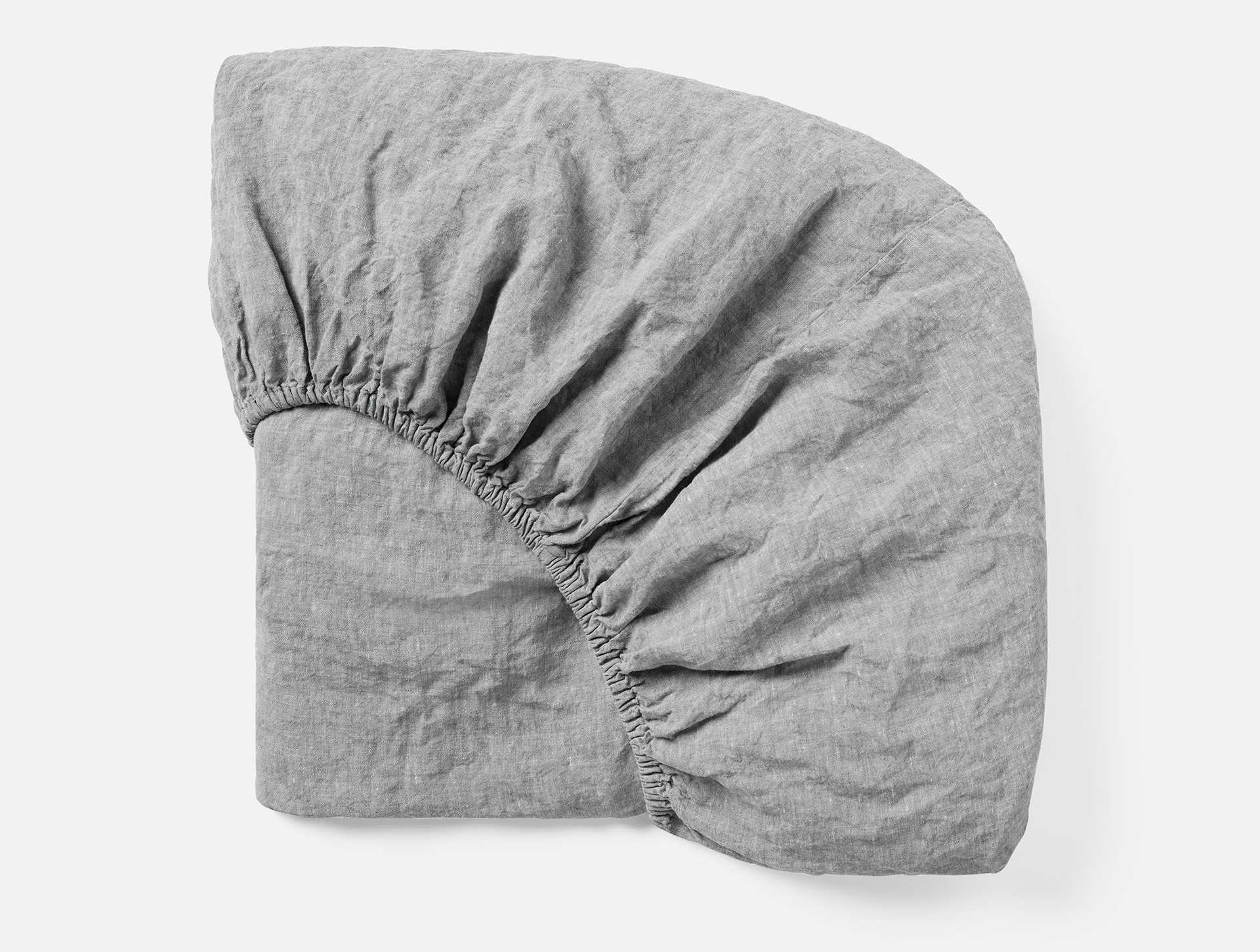
Elastic around the edges helps a fitted style stay in place, but elastic alone cannot compensate for a size mismatch. Installation can help: lift each corner enough to pull the pocket fully down rather than stretching only the last bit of fabric over the edge. Make sure the protector lies flat, with no folds trapped beneath the fitted sheet. For an encasement, follow its directions and avoid pulling the closure in a way that strains the fabric.
Adjustable beds introduce another fit consideration. The mattress may flex at the joints as the base moves, so the protector should be compatible with that movement and remain secure when the bed changes position. Confirm suitability in the product details before purchase. A snug, correctly sized fit makes the protector easier to live with and helps prevent uncomfortable wrinkles beneath the sheet.
Materials and construction, decoded
The surface of a protector may be made from cotton, polyester, a blend, or another textile. Surface fabric influences softness, texture, and how quickly the layer dries. Beneath it, some designs include a waterproof membrane or coating. Others rely on absorbent materials without promising a complete liquid barrier. Because products vary, the material list and stated function are more informative than broad assumptions about a fiber.
Quilting or padding adds loft and can create a cushioned feel, while a flat construction usually stays closer to the mattress. A quilted surface may suit someone who wants a little softness; a slim protector may be preferable when preserving the mattress’s existing feel is the goal. Neither approach is automatically better. The right choice depends on whether your first priority is comfort, low-profile protection, or a balance of both.
It is also useful to distinguish the protector’s surface from its barrier. A soft top does not necessarily mean the entire product is breathable, and a waterproof backing does not by itself indicate how quiet or flexible it will be. Look for concrete details, such as what the top fabric is made from, whether the product includes a membrane, the mattress depth it fits, and any special laundering limits.
Claims about allergens or hygiene should be read with care. A physical barrier may help limit some direct contact with the mattress, but a protector is not a substitute for cleaning, washing bedding, or following medical advice for allergies or other health concerns. If a particular protection feature is important, verify that the product description explicitly addresses it rather than inferring it from words like “clean,” “fresh,” or “protective.”
Care that helps a protector last
A mattress protector is useful partly because it can be removed and washed. But frequent laundering, high heat, bleach, or rough treatment can damage certain fabrics and barrier layers. The care label should be the final authority. Before the first wash, check the manufacturer’s instructions for water temperature, cycle, detergent, drying method, and any limits on ironing or dry cleaning.
Many protectors can be machine washed, but that does not mean they all tolerate the same settings. A gentle cycle and mild detergent may be suitable for some constructions, while others have different requirements. Avoid fabric softener or bleach unless the care instructions specifically allow it: either may affect a finish or barrier. When in doubt, use the least aggressive approach permitted by the label.
Drying deserves particular attention. Excessive heat can harm elastic, coatings, or waterproof layers. If the instructions allow tumble drying, use the recommended setting and avoid leaving the protector in a hot dryer longer than necessary. Air drying can be an option when permitted. Make sure the protector is fully dry before putting it back on the mattress; trapped dampness is not a good way to keep bedding fresh.
Wash promptly after a spill, following the product directions and addressing the affected area without using harsh cleaning methods that could damage the fabric. For routine laundry, a practical schedule depends on the household: children, pets, allergies, spills, and warm or humid conditions may call for more frequent washing. The protector’s label and your own circumstances can guide the interval; there is no single schedule that fits every bed.
- Read the care label before the first wash and keep the instructions accessible.
- Use the recommended temperature, cycle, and detergent rather than guessing.
- Avoid bleach, softener, ironing, or high heat unless the manufacturer allows them.
- Let the protector dry completely before reinstalling it.
- Inspect seams, elastic, and the surface periodically for wear or damage.
A small tear, worn seam, or failing elastic can compromise the way a protector fits and performs. Check it when changing the bedding, especially after a spill or wash. If the barrier is visibly damaged or the fabric no longer stays in position, replacement may be more practical than trying to patch it. Follow the maker’s advice for any repair rather than applying adhesives or heat that could affect the materials.
Common buying mistakes to avoid
The most common mistake is choosing by bed size alone. “Queen” or “king” describes the mattress footprint, but not necessarily its height. A deep mattress or topper can make an ordinary pocket too shallow. Measure the full setup and compare it with the protector’s maximum mattress depth before ordering.
Another is treating “water-resistant” and “waterproof” as identical. They describe different levels of liquid defense, and terminology can vary between manufacturers. If liquid protection is essential, look for an explicit statement of the product’s intended performance and read the care instructions that preserve it. If the details are unclear, do not assume a soft, padded protector will stop a spill from reaching the mattress.
It is easy to focus on the feature list and overlook daily comfort. A protector that is difficult to remove, noisy, or too warm for your preference may end up being used inconsistently. Consider your laundry setup, the weight of the product, and whether it is likely to fit in your washing machine. A theoretically ideal barrier is less useful if caring for it is a chore you are unlikely to do.
Finally, do not expect one layer to solve every bedding concern. A protector can help guard the mattress, but it cannot fix a badly fitted sheet, change the firmness of a mattress, or make a room cooler on its own. Identify the problem you are trying to address first. That simple step makes it easier to compare products without paying for features that do not matter to your household.
A quick checklist before you choose
Before settling on a mattress protector, run through a few practical questions. The answers will help turn a crowded set of product claims into a decision based on how you actually use your bed.
- What needs protecting? Decide whether your main concern is everyday moisture, spills, broader coverage, or general wear.
- How much coverage do you want? Choose between a fitted top-and-side design and a more complete enclosure, if available.
- How tall is the full sleep surface? Measure the mattress with any topper that will stay in place.
- What feel do you prefer? Compare flat and padded styles, and consider surface texture, noise, and thickness.
- How should it be cleaned? Check washing and drying instructions and make sure they suit your routine.
- Does it fit your bed type? Confirm compatibility with adjustable bases or unusual mattress dimensions where relevant.
The bottom line
A mattress protector is a practical layer, but choosing well is about more than finding something that fits the bed size. Coverage determines what parts of the mattress are shielded; construction affects breathability, noise, and surface feel; and pocket depth helps keep the layer secure. Care instructions matter just as much, because the protector’s usefulness depends on being able to wash and maintain it without damaging its materials.
Start with the messes and wear you want to guard against, then check dimensions, materials, feel, and laundry requirements. When those details line up with your household, a protector can do its job in the background—helping keep the sleep surface easier to care for, without stealing the spotlight from the comfort of the bed.