Nursery Bedding • Safety & Care
A Practical Guide to Safer, More Comfortable Nursery Bedding
A peaceful-looking crib can be lovely to prepare, but when it is time for sleep, simplicity matters most. The essentials are a firm, flat mattress, a correctly sized fitted crib sheet, and a clear sleep space. Here’s how to choose comfortable nursery bedding, check that it fits, and make everyday laundry a little easier—without letting decorative extras crowd out safety.
Start with a safe, uncluttered sleep space
Shopping for nursery bedding can quickly become an exercise in comparing colors, textures, fiber labels, and charming patterns. Yet the first question is not which shade looks best with the curtains. It is whether the sleep setup is appropriate for the baby’s age, crib, and mattress. For routine infant sleep, follow current safe-sleep guidance from your local pediatric health authority. In the United States, the American Academy of Pediatrics recommends placing babies on their backs on a firm, flat, non-inclined sleep surface, with only a fitted sheet covering the mattress.
That means keeping loose blankets, quilts, comforters, pillows, stuffed toys, bumpers, and other soft objects out of the crib. Decorative sets may include several of these items, but a matching collection is not a checklist for what belongs in a baby’s sleep space. Some pieces may be useful for supervised decoration or other purposes, but they should not be placed in the crib for infant sleep. When in doubt, consult your pediatrician and the crib and mattress manufacturers’ instructions.
Keep the sleep surface simple even when the nursery is styled with care. A fitted sheet is designed to cover the mattress, not to add cushioning or change its firmness. Do not layer extra sheets, blankets, pads, or toppers beneath or over the baby. If a mattress protector is being considered, check with the crib and mattress manufacturers and follow applicable safety guidance; it must not interfere with the mattress’s fit, firmness, or intended use. A product marketed as breathable, organic, or specially designed for babies should not be treated as a substitute for safe-sleep recommendations.
Choose a sheet by measurements, not just its label
“Crib size” sounds reassuringly specific, but a label alone does not guarantee that a sheet will fit a particular mattress securely. Crib mattresses can differ in dimensions and thickness, and portable cribs or play yards may use distinct sleep surfaces. Before buying, check the mattress manufacturer’s stated dimensions and compare them with the sheet’s measurements. Confirm that the product is intended for that type of sleep surface, rather than assuming a standard crib sheet will work everywhere.
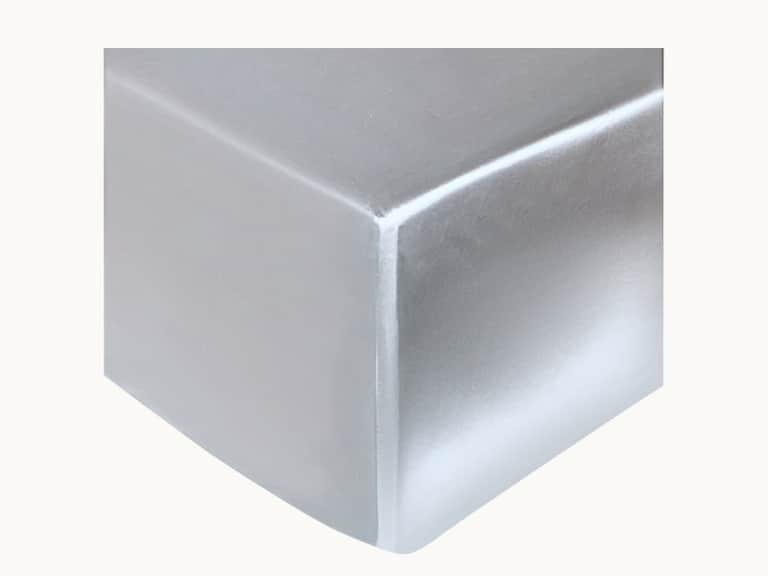
For a useful fit check, look for the sheet’s length, width, and pocket depth, if provided. Pocket depth describes how much of the mattress edge the fabric is designed to cover. A sheet that is too shallow may pull up at the corners; one that is too large may leave excess fabric. The goal is not merely to stretch the cloth around the mattress, but to have it sit flat and secure on all sides without bunching.
Read the manufacturer’s fitting instructions and use the sheet only with the mattress type for which it is intended. If you have a nonstandard crib, a shaped mattress, or a mattress supplied with a specific product, check compatibility directly rather than relying on a visual guess. Do not try to make an ill-fitting sheet work by tucking loose material underneath the mattress or adding clips, straps, or other accessories that have not been approved for that use.
After laundering, repeat the fit check. Cotton and other fabrics may change size after washing, especially if exposed to high heat. A sheet that fit well before its first wash may become difficult to install or may no longer cover the mattress as intended. If the corners pull free, the fabric gathers, or the sheet appears stretched beyond its design, stop using it until you can confirm a suitable fit.
What makes a fitted crib sheet stay put?
Construction details can make a practical difference. Many fitted sheets use elastic at the corners; others have elastic that runs around the full perimeter. Either design needs to hold the fabric smoothly on the mattress. A broad elastic edge can help distribute tension, while neatly finished seams may support durability through repeated washing. Still, the presence of elastic does not prove that a sheet is the right size or guarantee that it will stay on every mattress.
Inspect the sheet before the first use. Check that the seams are intact, the elastic is enclosed or finished as intended, and there are no loose threads or damaged areas. Follow the maker’s instructions for putting it on, and make sure every corner is fully seated. Then run a hand across the sleep surface to check for folds, raised areas, or bunching. The sheet should lie smooth and taut—not so stretched that the seams strain, and not so loose that fabric gathers.
Fit problems are often a clue that something in the setup needs another look. Confirm that the sheet and mattress dimensions match, that the mattress is positioned correctly in the crib, and that no additional layer has altered the mattress size or surface. If the sheet keeps slipping despite following the instructions, contact the manufacturer for guidance or choose a sheet designed for that exact mattress. Avoid improvised solutions that add hardware or loose components to the crib.
Fabric feel: comfort without overcomplicating the choice
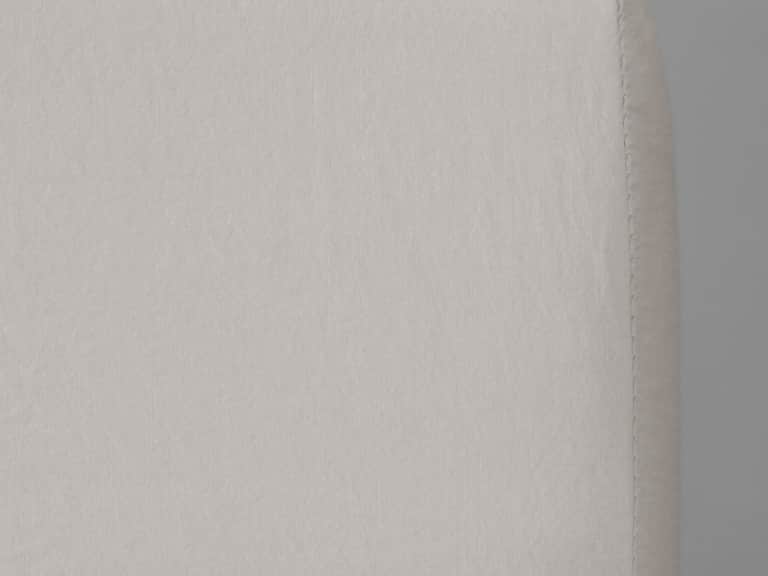
A fabric should feel pleasant to the touch, but there is no single fiber that is right for every family. Cotton is common, widely available, and offered in many weights and weaves. A lightweight cotton fabric may feel airy, while a denser weave may feel smoother or more substantial. The words “soft,” “cool,” and “breathable” are often used in product descriptions, but they are not precise measures of safety or a guarantee that a baby will be comfortable in every room.
Organic cotton is grown and processed under standards that vary by certification and region. A recognized certification can provide information about particular requirements in a supply chain, but it does not automatically mean that a sheet is safer for sleep, more breathable, or better suited to a specific infant. Likewise, a high thread count is not a stand-alone measure of comfort or quality. Consider the actual fabric composition, construction, care instructions, and fit rather than letting a single marketing term make the decision.
Some sheets are made from blends or synthetic fibers. These may be quick-drying or easy to care for, but their feel and performance depend on the particular fabric and construction. If the baby has sensitive skin or a known allergy, ask a health professional for advice about potential triggers and check the full fiber and finish information on the label. A “hypoallergenic” claim does not guarantee that a product will prevent irritation or allergic reactions for every child.
Temperature comfort also depends on the room, sleepwear, and the baby—not only the sheet. Avoid trying to manage warmth by adding blankets or soft bedding to the crib. Follow your health authority’s guidance on dressing an infant for sleep and maintaining a comfortable room environment. If you are unsure whether your baby is too warm or too cool, ask your pediatrician for advice tailored to your circumstances.
Certifications and labels: useful information, not a shortcut
Product labels can help caregivers understand what a sheet is made from and how it was produced. Look for a clear fiber-content statement, the manufacturer’s care instructions, and any certification details that matter to your household. If a product carries a certification, check what the certification covers and whether it applies to the finished item or only to certain materials. Certification names can sound similar while addressing different parts of production, so precise information is more useful than a broad “eco-friendly” claim.
Do not treat a certification as evidence that a sheet prevents illness, improves sleep, or is inherently safer in a crib. These labels describe specified standards or processes; they do not replace a proper fit, a suitable mattress, safe-sleep guidance, or medical advice. If a product description makes sweeping health promises, look for independent documentation and ask a qualified professional before relying on them.
Also check the product’s age and use instructions. A sheet intended for a crib mattress is not automatically suitable for a bassinet, portable crib, or play yard. Follow each product’s own instructions and do not modify a sheet to make it fit another sleep surface.
Make laundry simple and consistent
Nursery sheets are likely to be washed often, so straightforward care instructions matter. Before the first use, read the care label and follow the recommended wash and drying temperatures. Washing a new sheet before it goes on the mattress can remove packaging residue and reveal whether it shrinks or changes texture. Use a detergent appropriate for your household and follow its directions; extra detergent or fabric softener is not necessary simply because the item is for a baby.
When the label permits, wash sheets with similar colors and fabrics, and avoid overloading the machine. An overcrowded drum can make rinsing and drying less effective. Promptly remove clean sheets from the washer or dryer to reduce musty odors and excessive creasing. Make sure the sheet is fully dry before putting it back on the mattress, and check that seams and elastic remain in good condition after repeated laundering.
If a sheet becomes soiled, change it as needed and clean it according to the label. Keep a small rotation of clean, correctly sized sheets so there is a fresh one ready without rushing to use a damp item. There is no need to add extra bedding to the crib as a backup; store spare sheets nearby, outside the sleep space. If your baby has a medical condition or needs special laundry precautions, follow the care advice from the child’s clinician.
Skip unapproved treatments or alterations. Do not apply sprays, coatings, or home remedies to a crib sheet unless the manufacturer specifically permits them and they are appropriate for the intended use. Avoid using pins, ties, or accessories to repair an elastic edge. If the sheet is torn, stretched, or no longer fits securely, replace it rather than attempting a makeshift fix.
A calm, practical shopping checklist
It is easy to get swept up in a coordinated nursery collection, especially when every piece is presented as part of a complete look. A short checklist can bring the decision back to what matters for the sleep surface:
- Confirm the mattress type and exact dimensions using its manufacturer’s information.
- Check that the sheet is expressly intended for that sleep surface and compare its measurements with the mattress.
- Review pocket depth, elastic construction, and fitting instructions where those details are provided.
- Read the fiber-content label and consider whether the fabric’s feel and care needs suit your household.
- Look for clear laundering directions and check whether the sheet may shrink or require special care.
- Inspect seams, elastic, and fabric before use and again after regular washing.
- Keep the crib clear of loose bedding and other soft objects during infant sleep.
Buying more sheets than you need is not required, but having a small rotation can make ordinary changes easier. Prioritize reliable fit and easy care over decorative details. The colors and pattern can still contribute to the room’s overall style; they simply do not need to determine what goes into the crib.
Common questions about nursery bedding
Can I use a receiving blanket as a fitted sheet?
No. A blanket is not designed to fit securely over a crib mattress. Use a fitted sheet made for the specific mattress, installed according to its instructions. Keep loose blankets out of the crib during infant sleep and follow current guidance on safe sleep.
Is organic cotton required for a crib sheet?
No particular fiber label replaces the basics of fit, care, and a safe sleep environment. Organic cotton may appeal to families who value its production standards, but “organic” does not by itself prove that a sheet is safer or more comfortable for every baby. Read the full product information and choose a sheet that fits the mattress securely.
What should I do if the sheet keeps coming off?
Stop using it until you can check the setup. Compare the sheet and mattress measurements, make sure the mattress is intended for the crib, and review the sheet’s fitting instructions. Do not add straps, clips, or other improvised devices. Ask the manufacturer about compatibility or select a correctly sized sheet.
How often should crib sheets be washed?
Change a sheet whenever it is soiled or damp, and follow the product’s care label for routine laundering. The right schedule can vary with household needs and the baby’s health. Keep clean spares available, but store them outside the crib rather than layering them on the mattress.
Do breathable fabrics make loose bedding safe?
No. Descriptions such as “breathable” do not make blankets, pillows, bumpers, or other loose items appropriate for an infant sleep space. Keep the sleep surface clear and follow advice from recognized health authorities.
The simplest setup is often the most reassuring
Good nursery bedding is less about building a picture-perfect crib and more about getting the practical details right. A sheet should be made for the mattress, fit smoothly, and stand up to regular washing. Fabric choice can reflect personal preferences, but no material or marketing claim should distract from the essentials: a firm, flat sleep surface, a fitted sheet that stays securely in place, and no loose items in the crib during infant sleep.
When the label is unclear, the mattress is an unusual size, or a sheet will not fit as intended, pause and check with the manufacturer. For questions about an infant’s individual needs, seek guidance from a pediatric health professional. A simple setup, a fresh sheet within reach, and care instructions you can follow without fuss make a practical foundation for the nursery—one that is thoughtfully prepared without being overcomplicated.
This article offers general information, not medical advice. Follow current safe-sleep guidance from your local health authority and the instructions provided by crib, mattress, and bedding manufacturers.